EN



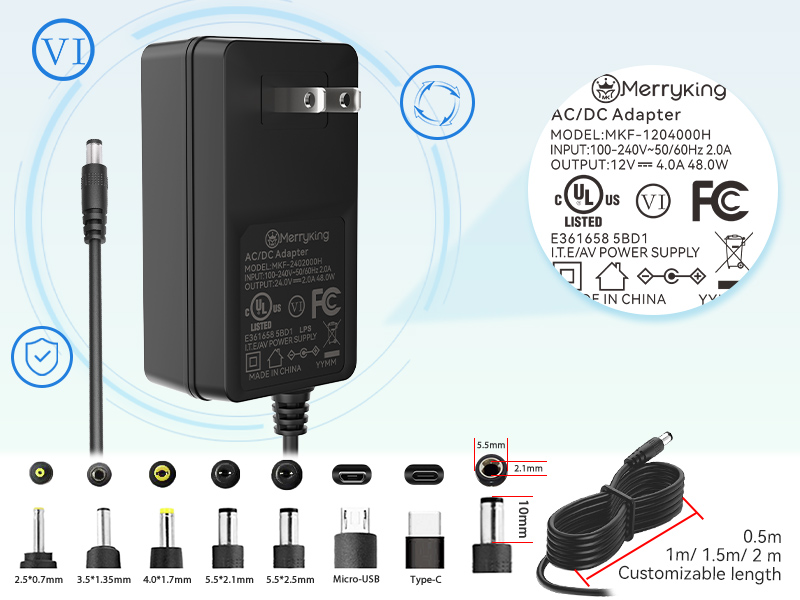
Every adapter order should come with a clear product specification. The specification document defines the electrical values, such as input voltage range, output voltage and current, power rating, ripple, and efficiency, as well as the mechanical values, such as dimensions, connector type, and cable length. It is the reference that both sides use to judge whether the delivered product meets the agreed design. If your order includes custom elements, such as a specific logo or connector, the specification should state those clearly. Ask the supplier for the drawing or datasheet that matches your model number and keep it as part of your product record, because it becomes the baseline for future orders and for resolving any disagreement about what was ordered.
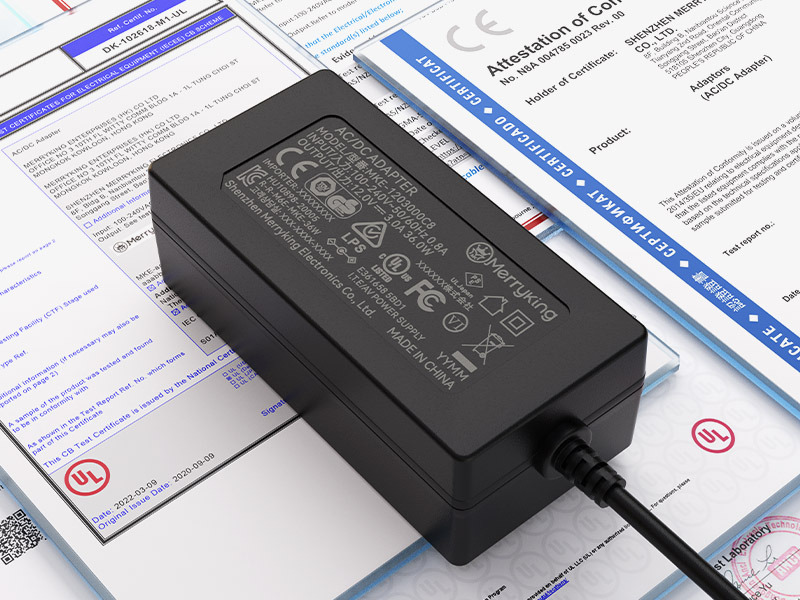
Certification documents prove that your adapter meets the safety and EMC requirements of your destination market. The key documents are the safety certificates, such as UL or cUL, CE, UKCA, PSE, KC, SAA, or BIS, depending on your market, and the corresponding test reports. Check that the certificate lists your exact model number and output ratings, because a certificate for a similar model does not cover a different one. For environmental compliance, request the RoHS declaration and, if applicable, REACH or Prop 65 information, because buyers and customs increasingly require evidence that restricted substances are controlled. If your product is for medical equipment, ask for the 60601-1 certificate and confirmation of the insulation classification. Ask the supplier to provide copies of the certificates and reports with each shipment or on request, and verify them against the issuing laboratory's records when the stakes are high.
Quality documents tie the delivered goods to your specification. The most important is the inspection report, ideally an AQL sampling report showing the sample size, defect categories, and the acceptance decision for your batch. Ask whether the factory performs a 100% aging test on every unit and whether the aging test records can be provided. The packing list and commercial invoice are required for customs clearance, and they must match the actual shipment in model, quantity, and declared value. Some buyers also request a certificate of origin or a warranty statement. Confirm the warranty terms in writing: the warranty period, what is covered, and how defective units are replaced or credited. Having these documents standardizes the receiving process, so you can check the shipment against the paperwork instead of trusting the container blindly.
The documentation relationship does not end at the port. The warranty statement defines what happens when a unit fails in the field: the warranty period, what is covered, how claims are submitted, and whether the supplier replaces units, issues credit, or requires the failed units to be returned for analysis. Ask for the claim procedure in writing and the expected response time, because a vague warranty is a warranty you cannot enforce. If your product has a long lifecycle, also request the supplier's policy on component obsolescence, including how design changes are communicated and whether end-of-life notices are issued before a model is discontinued. For regulated products such as power adapters, these after-sales documents are as important as the certificates, because they determine how quickly a field issue becomes a resolved claim instead of a stranded customer.
A distributor was importing a new line of AC adapters for the European market. At customs, the broker asked for the CE declaration of conformity and the test report for the exact model being cleared. The supplier had provided a full documentation pack with the shipment, including the specification sheet, the CE certificate listing the model number, the RoHS declaration, and the AQL inspection report. The goods cleared without delay. In the same period, a competitor's shipment was held at the same port because the supplier's certificate covered a similar model but not the exact output, and re-testing took weeks. The scenario illustrates a practical rule: documentation is not paperwork for its own sake. It is the difference between a smooth market entry and a costly delay, and it should be specified in the purchase agreement before the order is placed.
Receiving documents is not the same as trusting them. Verify that the model number on each certificate matches the model on the product label and the invoice. Check the certificate's validity period and issuing body, and confirm the test report is dated and references the right standard. For critical orders, contact the issuing laboratory or use its online verification service to confirm the certificate is genuine. Confirm the RoHS declaration covers the components in your product and is updated when the design changes. Finally, keep the document pack in a structured file with the specification, certificates, test reports, and inspection records per order, so that any future audit, recall, or customer request can be answered quickly. A supplier that provides complete, verifiable documentation is demonstrating the process discipline that also protects product quality.
Which documents are essential for importing power adapters?
The essential pack includes the product specification, safety certificates and test reports for your market, the RoHS declaration, the AQL inspection report, the packing list, and the commercial invoice. Certificates must list the exact model and output ratings of the shipment.
How can I check that a supplier's certificate is genuine?
Contact the issuing laboratory or use its online verification service, and compare the model number, output ratings, and validity period with the certificate. A genuine certificate matches the product label and the issuing body's records.
Should the supplier provide test reports for every batch?
A reliable supplier provides AQL inspection reports per batch and can provide aging test records on request. This ties every shipment to your specification and makes receiving inspection possible at your side.