EN
EN



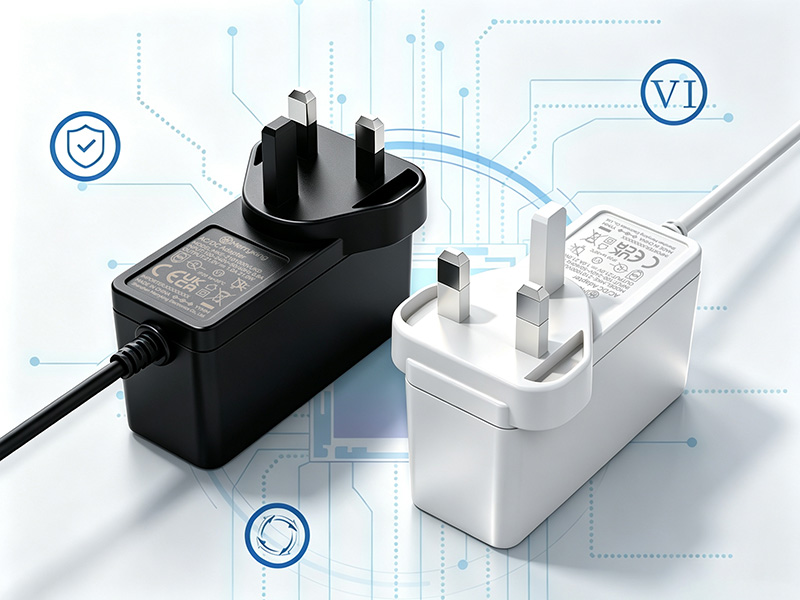
The most critical of all good power adapter features is a comprehensive set of safety protection circuits that prevent damage to both the connected device and the adapter itself. A well-designed adapter includes at minimum four protection mechanisms: over-voltage protection (OVP) that shuts down the output if voltage exceeds a safe threshold, over-current protection (OCP) that limits current during overload conditions, over-temperature protection (OTP) that reduces output or shuts down when internal temperature exceeds design limits, and short-circuit protection (SCP) that immediately cuts output when a direct short is detected. These circuits are not optional accessories; they are required by international safety standards including IEC 62368-1, UL 62368, and EN 62368-1. Buyers should request documentation from the supplier that confirms each protection circuit has been tested during type approval, including the specific trip thresholds and recovery behavior. An adapter that latches off after a fault requires manual reset, while an auto-recovery adapter resumes output when the fault condition clears. The choice between latch-off and auto-recovery depends on the application: latch-off is preferred for unattended equipment where automatic restart could be hazardous, while auto-recovery suits consumer devices where user intervention should be minimized.
Good power adapter features include universal input voltage acceptance, typically 100-240V AC at 50/60Hz, which enables a single adapter model to operate in any country without voltage selection switches or region-specific variants. The universal input specification appears on certification documents with ratings such as 100-240V tilde 50/60Hz 0.5A Max, confirming that the adapter draws no more than 0.5 amperes from the mains at any voltage within that range. This specification is verified during certification testing, where the adapter is tested at both the minimum (100V) and maximum (240V) input voltages. Beyond voltage range, compatibility features include electromagnetic compatibility (EMC) compliance, meaning the adapter neither emits excessive electromagnetic interference nor is susceptible to external interference. Adapters meeting FCC Part 15 Class B limits for conducted and radiated emissions are suitable for residential environments, while Class A limits apply to industrial settings. CE-EMC compliance under the European EMC Directive covers similar requirements for the European market.
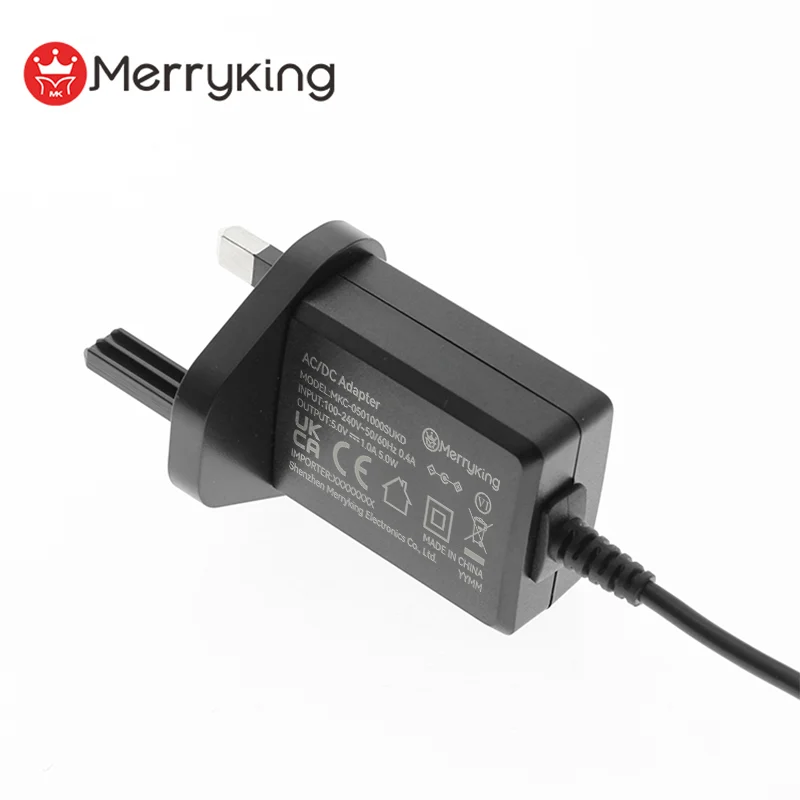
Energy efficiency has become one of the defining good power adapter features as regulatory bodies worldwide have imposed increasingly stringent efficiency standards. The US Department of Energy (DOE) Level VI standard, effective since 2016, mandates minimum average efficiency levels and maximum no-load power consumption for external power supplies. The Code of Conduct (CoC) Tier 2, adopted by the European Commission, sets similar or more stringent requirements. An adapter meeting DOE Level VI typically achieves 87 to 92 percent efficiency at rated load and consumes less than 0.1W with no load connected. Thermal management is closely linked to efficiency: an adapter operating at 90 percent efficiency dissipates 10 percent of its input power as heat, meaning a 60W adapter generates approximately 6.7W of heat that must be managed through the enclosure design. Passive cooling via aluminum heatsinks or thermally conductive plastic enclosures is effective for adapters up to approximately 65W. Higher-power desktop adapters in the 100W to 420W range benefit from active cooling with temperature-controlled fans that maintain thermal stability during sustained operation.
Good power adapter features extend beyond electrical specifications to the physical construction and component selection that determine long-term reliability. The internal construction of a quality adapter uses flame-retardant enclosure materials rated to UL 94 V-0 or 5VA, meaning the material self-extinguishes within 10 seconds after the ignition source is removed. Internal components such as electrolytic capacitors should be rated for 105 degrees Celsius operation with a minimum rated lifetime of 2,000 to 3,000 hours at rated temperature, translating to 5 to 10 years of typical use at lower operating temperatures. The switching transformer core material, typically ferrite, affects efficiency and operating temperature. Output cable quality matters for sustained current delivery: cables with insufficient conductor gauge exhibit voltage drop and heating, particularly at currents above 3A. The connector at the device end should have a positive retention mechanism to prevent accidental disconnection, and the strain relief at the adapter exit point must withstand repeated bending without internal wire fracture. Manufacturers who maintain ISO 9001 quality management systems provide documentation of component traceability, incoming inspection records, and production testing protocols that verify each unit meets specification before shipment.
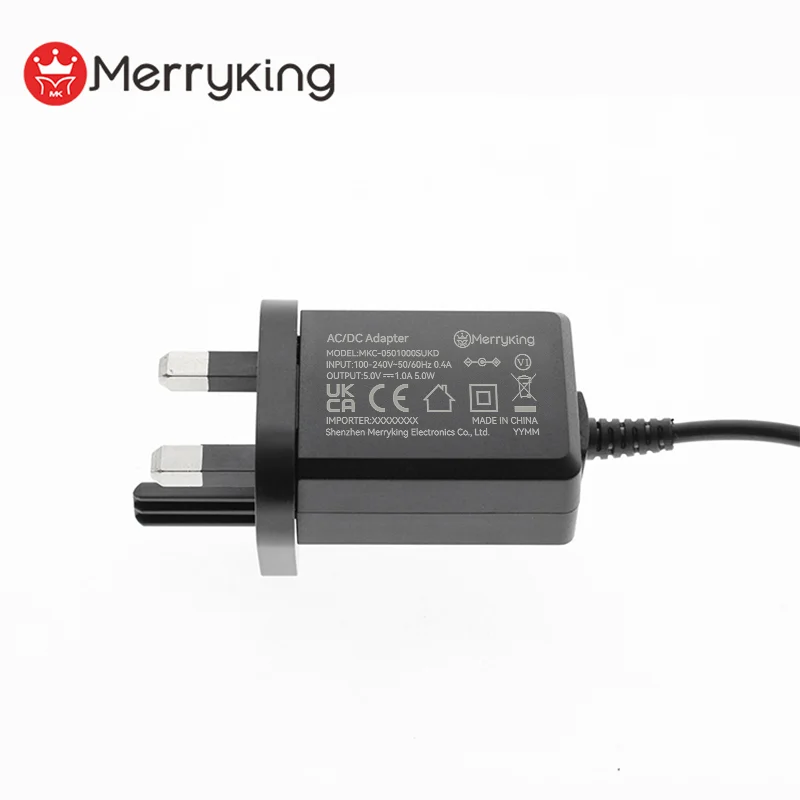
Among good power adapter features, the breadth and validity of the certification portfolio is perhaps the most objectively verifiable indicator of quality. An adapter carrying certifications from UL, ETL, FCC, CE-LVD, CE-EMC, GS, UKCA, SAA, RCM, PSE, KC, KCC, S-MARK, PSB, and BIS demonstrates that the product has passed independent laboratory testing for electrical safety, electromagnetic compatibility, and material requirements across virtually every major market. Each certification requires periodic factory inspections and retesting, meaning the manufacturer maintains ongoing quality control rather than a one-time compliance effort. Buyers evaluating good power adapter features should verify that certifications are current, that the certifying laboratory is accredited, and that the model number on the certificate matches the product being purchased. Suppliers like Shenzhen Merryking Electronics, who maintain sixteen active international certifications, provide buyers with a consolidated compliance package that streamlines multi-region product launches.
An industrial automation company sourcing power adapters for a new line of programmable logic controllers (PLCs) needed units rated at 24V 4A (96W) with reliable operation in factory environments where ambient temperatures could reach 45 degrees Celsius. The evaluation criteria focused on five good power adapter features: safety protection circuits verified through test reports, DOE Level VI efficiency compliance, 100-240V universal input with EMC compliance, UL 94 V-0 enclosure material certification, and active thermal management. The team evaluated three suppliers and found that only one provided complete documentation for all five criteria, including detailed protection circuit test data showing OCP trip at 5.2A (30 percent above rated), OTP activation at 95 degrees Celsius internal, and recovery behavior in latch-off mode. The supplier's 24V 4A desktop adapter from the MKI series maintained 24.0V plus or minus 0.2V output across the full load range at 45 degrees Celsius ambient, and the active cooling fan maintained internal temperature below 75 degrees Celsius during 72-hour continuous full-load testing. The procurement team selected this adapter based on documented performance rather than catalog specifications alone.
What efficiency rating should I look for in a power adapter?
Look for adapters that meet DOE Level VI or CoC Tier 2 efficiency standards. At rated load, a quality adapter typically achieves 87 to 92 percent efficiency. Also check the no-load power consumption, which should be below 0.1W for adapters under 49W and below 0.21W for adapters 49W to 250W. Request the efficiency versus load curve from the supplier to verify performance across the expected operating range, not just at full load.
How can I verify that safety protection circuits are actually present?
Request the type test report from the supplier, which should include specific test results for OVP, OCP, OTP, and SCP. The report should list the trip threshold for each protection and the recovery behavior. If the supplier cannot provide this documentation, it indicates either that the protections were not tested or that the test results were unfavorable. Independent third-party testing is an option for critical applications, though it adds cost and time to the evaluation process.
Are more certifications always better for a power adapter?
Not necessarily. The relevant certifications depend on your target markets and application. For example, if you sell only in the European Union, CE-LVD and CE-EMC are mandatory, while UL and ETL are not required. However, a manufacturer holding a broad certification portfolio demonstrates investment in quality and compliance infrastructure that reduces risk for buyers planning future market expansion. For global product launches, a supplier with sixteen certifications eliminates the need to source region-specific adapters.