EN
EN



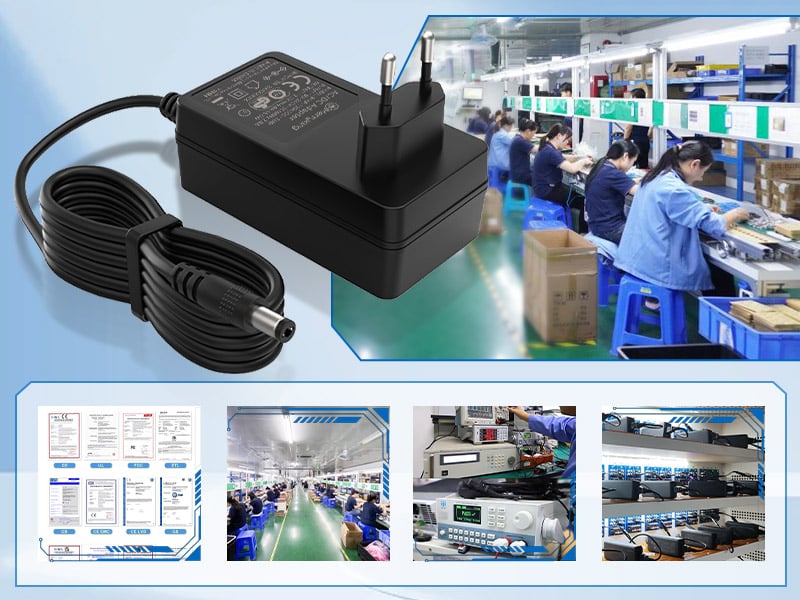
Begin the audit in the office, not on the line. Ask to see the business license, ISO 9001 quality management certificate, and the safety certificates that cover the models you plan to buy. For each certificate, check that the model number and output ratings match the product you intend to order, because a certificate for a similar model does not cover a different output. Review the quality documents: incoming material inspection records, the procedure for handling defective lots, and the AQL sampling plan used before shipment. Also confirm the factory's warranty terms in writing and whether test reports are issued per batch. Document checks are fast, but they tell you whether the factory treats compliance as a real process or a decoration.
On the production floor, follow the actual process flow for a power adapter. Look at how components are inserted, whether the soldering quality is consistent, and how the factory handles electrostatic protection for sensitive parts. Check the plug-in process and the automated inspection equipment, because automated testing reduces the human error that manual checks cannot catch. Observe the laser engraving or silk-screen marking step to confirm that logos and ratings are applied cleanly and durably. Note the housekeeping of the workshop and warehouse: a well-organized warehouse with clear inventory records supports accurate material control, while scattered stock suggests weak traceability. Take pictures and record what you see at each station, because your notes are the evidence for the final decision.
Testing is the core of a power adapter factory audit. Confirm that every unit goes through a 100% aging test before shipment, and observe the aging test system in operation. Ask how long the burn-in runs and how failures are logged. Review the AQL inspection procedure and ask to see recent sampling records and the defects found. If the factory has a laboratory, check the equipment relevant to your product: a RoHS analyzer for verifying restricted substances, a temperature and humidity chamber for environmental testing, a lightning surge generator for transient immunity, and an EMI test machine for electromagnetic interference. You do not need to run every test during the audit, but the presence and calibration of this equipment tells you whether the factory can verify the claims it makes.
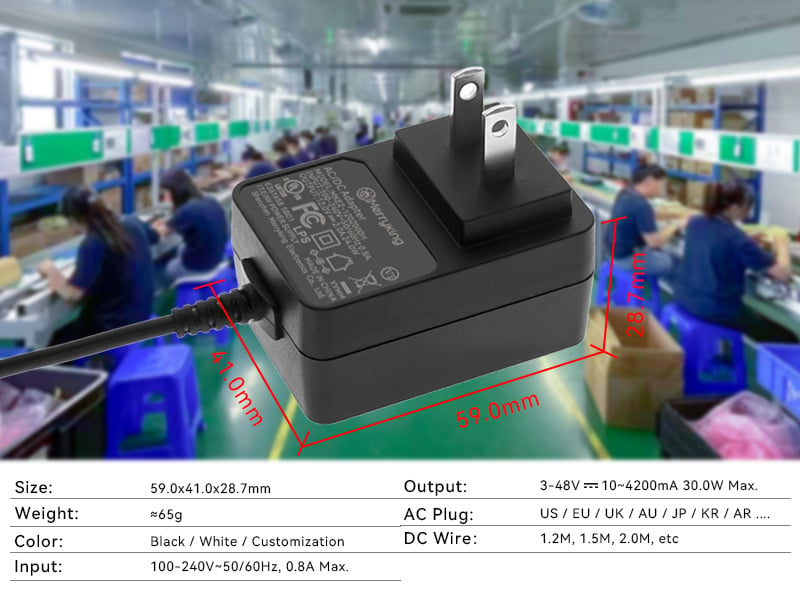
An audit is also a conversation. Ask the quality manager how defects are categorized, how the factory decides whether a batch passes or fails, and what happens to rejected units, whether they are reworked, scrapped, or returned to the supplier. Ask the line operators how they report a problem they see during production, because the answer reveals whether the factory has a real feedback loop or a culture where problems are hidden. Check whether operators work from documented operation manuals and whether training records exist for new staff, because power adapter production depends on consistent manual steps even when automation is in place. These conversations often surface issues that documents and equipment checks cannot: a factory with engaged operators and a quality team that answers in specifics is usually one that controls its process in practice, not only on paper.
A buyer was choosing between two power adapter factories for a three-year supply contract. Both factories had the same certificates on paper and similar prices. During the on-site audit, the first factory showed a fully equipped laboratory, a running 100% aging test line, and AQL records with defect categories documented for each batch. The second factory presented its certificates but could not show aging test logs, and the laboratory equipment was not calibrated or was absent. The buyer selected the first factory, and over the following year the field failure rate stayed within the agreed target, while the second factory later issued a quality alert on a batch for a different customer. This scenario shows why an audit matters: paper compliance and operational compliance are not the same thing, and the difference shows up on the production floor.
After the audit, score the factory against a simple checklist: documents complete, production process consistent, testing systems verified, and communication transparent. For any gap you find, decide whether it is critical, such as missing aging tests, or minor, such as a housekeeping issue that can be corrected quickly. Put your findings in writing and share them with the factory, because a factory that accepts an improvement plan demonstrates the responsiveness you want in a long-term partner. Agree on a re-audit date if gaps need verification, and define the quality metrics you will review monthly, such as on-time delivery rate and field failure rate. An audit is not a one-time event; it is the baseline for a monitoring relationship that protects your supply over the life of the contract.
What should I check first in a power adapter factory audit?
Start with documents and certificates. Verify that the business license, ISO 9001 certificate, and product safety certificates cover the exact models and output ratings you plan to buy. A certificate for a similar model does not cover a different output.
How long does a proper factory audit take?
A focused audit of a mid-size adapter factory usually takes one day: a few hours for documents, a few hours on the production floor, and time for the laboratory and warehouse review. If you need to witness full testing cycles, plan for one and a half to two days.
Can I audit a factory without visiting in person?
A virtual audit with video calls and photo evidence can cover documents and high-level process review, but it cannot verify that testing actually runs on every unit. For critical suppliers, combine a remote review with an in-person visit, ideally before the first large order.