EN
EN



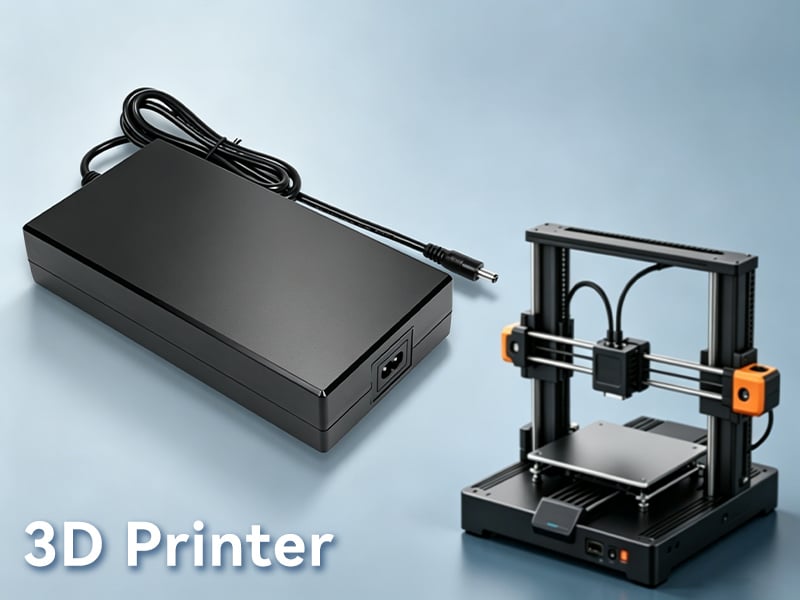
Every 3D printer relies on a stable DC power supply to heat the nozzle, drive stepper motors, and maintain consistent bed temperatures. The wall outlet in your workshop or office delivers alternating current (AC), typically 100-240V at 50 or 60Hz depending on your region. The 3D printer's control board, however, requires direct current (DC), usually 12V or 24V. This is where a power adapter for 3d printers performs the critical role of AC-to-DC conversion. In a typical switch-mode AC-DC adapter, the AC input is rectified and filtered, then converted through high-frequency switching and an isolation transformer before being regulated to the required DC output. A rectifier circuit then converts this alternating waveform into a pulsating DC signal. Filtering capacitors smooth out the ripples, and a voltage regulator ensures the output remains stable even when the printer's power draw fluctuates during heating cycles. Without this precise conversion, the printer's sensitive electronics could experience voltage spikes that damage the mainboard or cause layer shifts mid-print.
Selecting a suitable power adapter for 3d printers begins with matching voltage and current ratings to your specific printer model. Entry-level printers such as the Ender 3 or Prusa Mini typically operate at 24V DC and draw between 10A and 15A, meaning the power supply must deliver at least 240W to 360W of continuous output. Larger enclosed printers with heated chambers or dual extruders may require 24V at 20A or more, pushing power requirements to 480W and beyond. An undersized adapter will overheat under sustained load, triggering thermal protection shutdowns that ruin long prints. Conversely, using an adapter with significantly higher current capacity is generally safe because the printer draws only what it needs, but the adapter itself becomes bulkier and less efficient at light loads. Matching the connector type is equally important: most consumer 3D printers use either a barrel jack connector (commonly 5.5mm outer diameter, 2.1mm or 2.5mm inner diameter) or screw terminals on the control board. Adapters with interchangeable DC plugs offer flexibility for workshops that maintain multiple printer models.
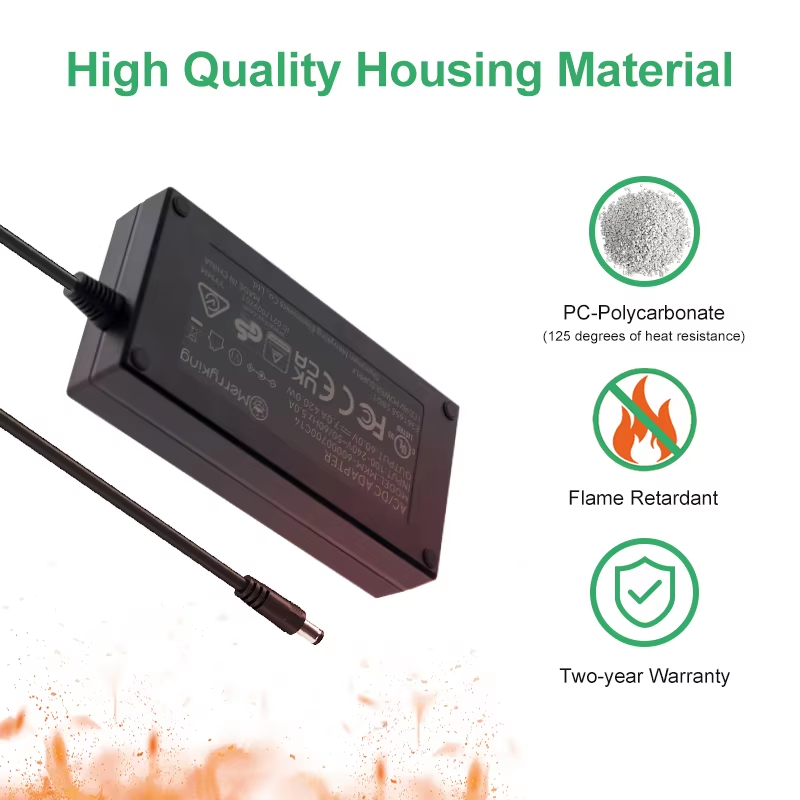
A well-designed power adapter for 3d printers includes multiple layers of protection circuitry that are often overlooked by buyers focused solely on wattage ratings. Over-voltage protection (OVP) shuts down the output if the internal regulation fails and the voltage climbs above a safe threshold, preventing damage to the printer's MOSFET drivers and heating elements. Over-current protection (OCP) limits output current during a short circuit or when a failed heated bed draws excessive power. Over-temperature protection (OTP) monitors the adapter's internal temperature and reduces output or shuts down before component-level damage occurs. For adapters used in humid workshop environments or makerspaces, ingress protection against dust and moisture provides an additional safety margin. Safety and compliance should be verified by checking the applicable documents: for example, UL or ETL safety certification for North America, CE conformity documentation for the EU, and FCC EMC compliance for the U.S. market. When evaluating a power adapter for 3d printers, requesting the certification documentation and test reports from the supplier is a practical step that helps buyers verify compliance rather than relying on printed logos alone.
3D printing sessions routinely run for 8, 12, or even 24 hours continuously. Under these conditions, the adapter's efficiency rating directly impacts both electricity costs and thermal buildup inside the printer enclosure. Adapters that meet DOE Level VI or similar high-efficiency standards convert a greater percentage of input power into usable DC output, wasting less energy as heat. An adapter rated at 85 percent efficiency will dissipate roughly 54W of heat when delivering 300W to the printer, while a 90 percent efficient unit dissipates only 33W under the same load. That 21-watt difference may seem small, but over a 24-hour print it adds up to half a kilowatt-hour of wasted energy and noticeably higher internal temperatures. Passive cooling via aluminum heatsink enclosures works reliably for adapters up to about 150W, while higher-power units benefit from integrated temperature-controlled fans. In enclosed printer cabinets, ensure the adapter has adequate ventilation and is not stacked directly beneath the heated bed, where ambient temperatures can exceed 50 degrees Celsius.
Consider a small prototyping studio operating six FDM printers simultaneously to fulfill rapid-turnaround client orders. Each printer uses a 24V system drawing an average of 12A during printing, translating to approximately 288W per unit. The studio initially used individually bundled adapters, but inconsistent quality across units led to two failures within the first three months. After switching to a single-brand power adapter for 3d printers with documented continuous-duty ratings and individual certification reports, the studio experienced zero power-related failures over the following 18 months. The procurement decision was based not on the lowest unit price but on the availability of thermal test data, warranty terms that covered continuous commercial use, and the supplier's willingness to provide voltage ripple measurements under load. This example illustrates that for production environments, the total cost of ownership for a power adapter extends beyond the purchase price to include downtime risk, replacement frequency, and print failure costs.
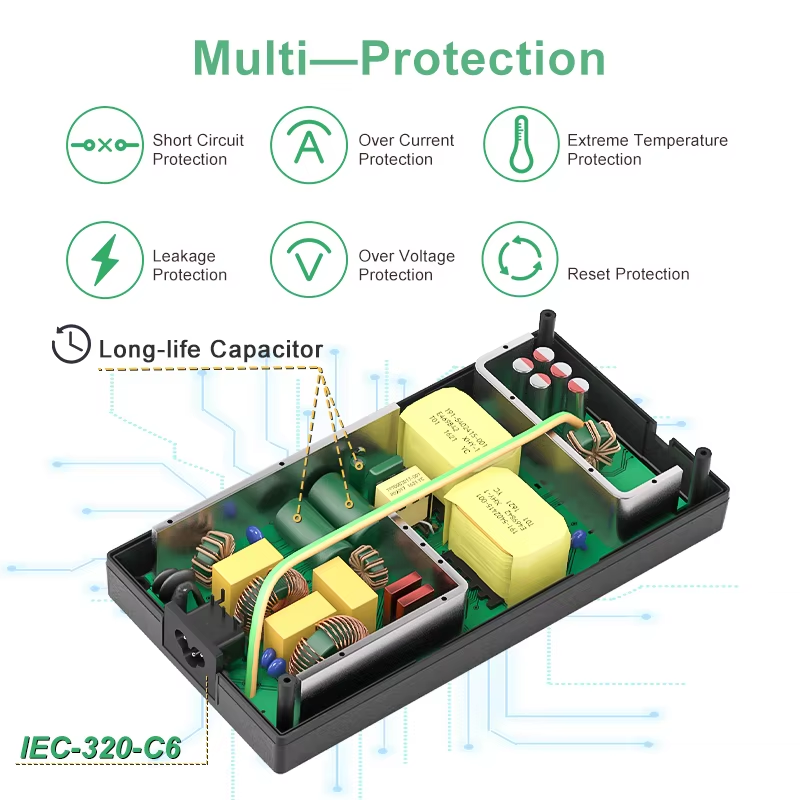
When sourcing a power adapter for 3d printers from manufacturers, buyers should prioritize suppliers with demonstrated expertise in AC-to-DC conversion technology and a track record of serving industrial and commercial customers. A supplier's certification portfolio is a strong indicator of quality management maturity. For instance, ISO 9001 quality management system certification, combined with product-level marks such as UL, CE-LVD, CE-EMC, FCC, PSE, SAA, and UKCA, signals that the manufacturer maintains systematic quality control from component sourcing through final testing. Manufacturers like Shenzhen Merryking Electronics, which holds 16 international safety certifications and serves clients including Bosch and Honeywell, demonstrate the level of compliance that professional buyers should expect. Requesting sample units for independent testing, reviewing internal construction through teardown inspection, and verifying that the adapter's rated power is sustainable at elevated ambient temperatures are practical steps that reduce procurement risk.