EN
EN



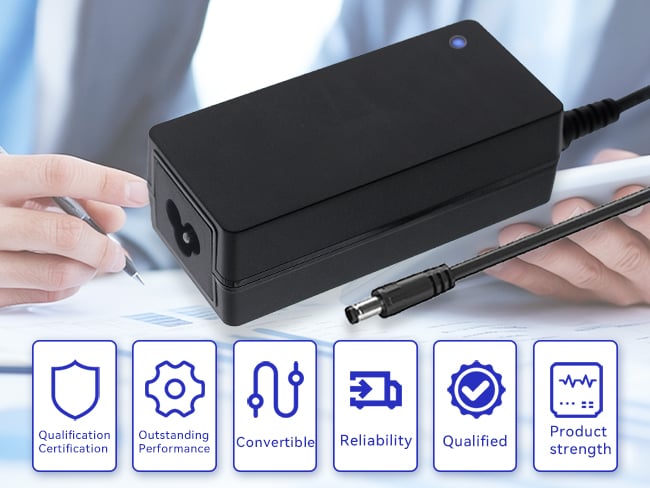
Many electronic devices require regulated DC power internally, whether supplied by an external adapter, an internal power supply, or a battery system. Household networking routers, LED products, audio/video equipment, industrial automation modules, and many other devices cannot use wall-outlet AC power directly without conversion and regulation. This is where an external power supply becomes indispensable. Understanding the fundamentals of a dc power adapter selection guide is a practical necessity for procurement managers, project engineers, and everyday consumers alike to avoid costly equipment damage and ensure long-term operational reliability. At Merryking, we provide switching power supply solutions for diverse operating environments, with exact performance, safety approvals, and market compliance depending on the selected model and datasheet.
To understand what a DC power adapter does, one must look at the transition from alternating current to direct current. Standard electrical grids distribute alternating current because it is highly efficient for long-distance transmission. However, internal microprocessors and delicate circuit boards require direct current, which flows continuously in a single direction. A professional switching adapter typically rectifies the AC input, converts energy through a high-frequency isolated power stage, and regulates the DC output through feedback control. Ripple and noise should be controlled within the limits stated in the adapter datasheet and required by the end equipment, measured under defined load, bandwidth, cable, and test conditions.
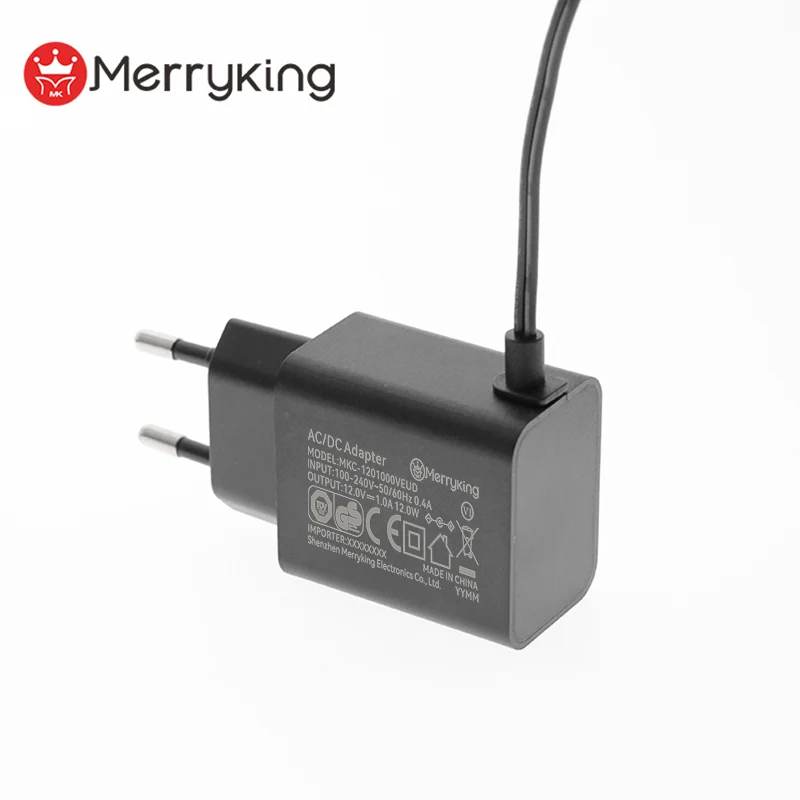
When navigating a comprehensive dc power adapter selection guide, the first critical step is matching the exact electrical requirements of your device. Incorrect voltage can damage hardware or prevent normal startup. The output voltage of the adapter should match the device's rated input voltage or fall within the input range allowed by the device manufacturer. Sourcing an adapter with higher voltage risks burning out internal capacitors, while a lower voltage will result in unstable performance or a complete failure to boot. For current, measured in amperes, the adapter's rating should meet or exceed the maximum demand of the device. For instance, if a high-power industrial router requires a 12V 5A power supply, using a compatible 12V adapter rated for 7A or 10A may be acceptable because the device normally draws only the current it requires. This is acceptable only when voltage, polarity, connector size, connector current rating, cable gauge, safety approval, and load characteristics are compatible.
In professional procurement and international trade, a power adapter is only as reliable as its regulatory backing. Because these devices handle lethal grid voltages, global safety compliance is a paramount concern for B2B buyers. When evaluating your next power solution, verify the applicable safety approvals, EMC compliance, energy-efficiency compliance, environmental declarations, and market-conformity requirements for the destination market. UL/cUL, ETL, GS, PSE, CCC, KC, SAA, or CB-based national approvals may relate to safety, depending on model and country; CE and UKCA are market conformity marks, FCC mainly relates to U.S. EMC or radio compliance, RoHS relates to restricted substances, and DOE Level VI relates to energy efficiency for regulated external power supplies. Uncertified or non-compliant adapters may lack adequate isolation, creepage and clearance, protection design, EMC control, or production quality control. A certified adapter is designed and tested to reduce electric shock and fire risks when used as intended, but certification does not eliminate risks caused by incorrect installation, overload, counterfeit supply, aging, liquid ingress, or use outside rated conditions.
Efficiency affects heat generation, operating cost, and long-term reliability, especially in equipment cabinets or large-scale commercial deployments. The distinction between premium adapters and sub-standard alternatives is often measured by energy waste during active use and standby modes. For the U.S. market, applicable external power supply efficiency requirements may include DOE Level VI, depending on product category and scope; for the European market, applicable EU ecodesign requirements should be reviewed separately. Instead of stating one universal efficiency percentage, manufacturers should provide model-specific average active efficiency, no-load power consumption, rated output power, and applicable efficiency level based on the relevant test method. In large-scale commercial deployments, selecting properly compliant high-efficiency adapters can reduce standby power consumption, cabinet heat, and total cost of ownership when the products are used within their rated conditions.
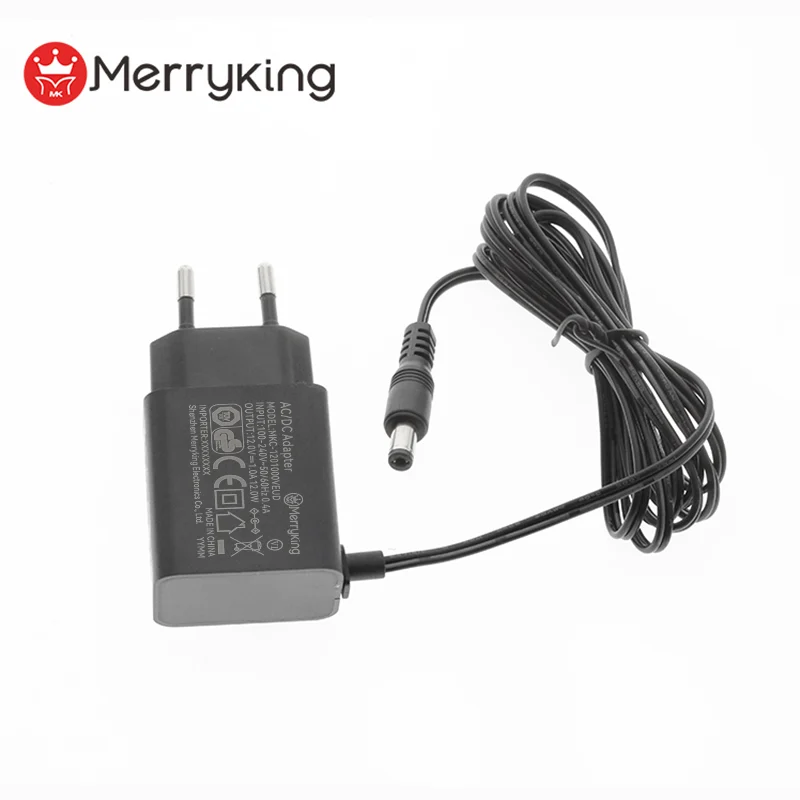
Beyond the internal circuitry, physical and mechanical integration determines the day-to-day usability of a power solution. A power adapter must connect correctly with the end equipment, which requires careful verification of DC plug dimensions, output polarity, cable length, and connector current rating. The industry standard utilizes barrel-type connectors, with common dimensions like 5.5x2.1mm or 5.5x2.5mm. Furthermore, understanding whether your device requires a "Center Positive" or "Center Negative" configuration is essential, because reversed polarity can damage unprotected circuits. Manufacturers such as Merryking may offer flexible form factors, including wall-mount series with fixed or interchangeable regional plugs and desktop series with C6, C8, C14, or other AC inlets depending on model. This mechanical adaptability can simplify international supply planning, but final market access still depends on plug type, AC cord approval, labeling, documentation, certificate coverage, and country-specific compliance.