EN



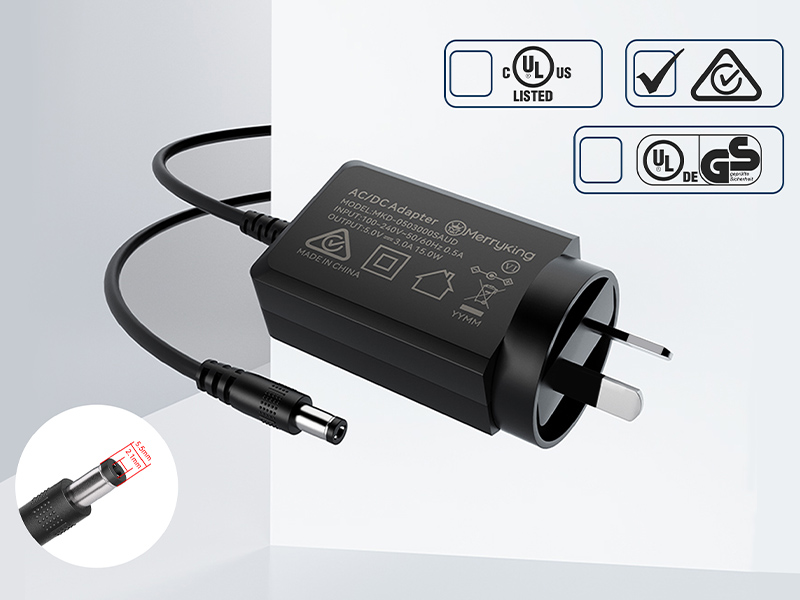
Compliance planning must happen before you order, not when the container arrives. Start by identifying the safety marks your destination market requires: UL or cUL and FCC for North America, CE and UKCA for Europe, PSE for Japan, KC for South Korea, SAA for Australia, and BIS for India. Confirm the voltage and plug standards as well, because a 100-240Vac universal input adapter with interchangeable plugs covers many markets, but a fixed-plug model is restricted to the region it matches. Check the energy efficiency requirements if your market regulates them, and confirm the environmental declarations such as RoHS. Every requirement that is checked before ordering saves you from customs holds, retailer rejections, and re-testing costs after arrival.
Beyond certificates, each market has labeling and packaging rules that catch unprepared importers. Confirm the markings required on the product label, such as the manufacturer identification, model, ratings, and safety logos, and check whether the language on the label must match the destination market. Verify the plug configuration is exactly the variant for your market, and confirm the carton labeling for retail channels, including barcode, model name, and any mandatory environmental symbols. If you sell through marketplaces, check their specific requirements for product images, documentation uploads, and compliance files. These details are often buried in the purchase agreement as afterthoughts, but a label printed in the wrong language or a missing barcode can delay a retail launch as surely as a missing certificate. Put the labeling and packaging specification into the purchase order so the factory builds it into the first batch.
Supplier verification is the foundation of a safe import program. Request the factory's certificates and confirm that they cover the exact models and output ratings you are importing, because a certificate for a similar model does not cover a different one. Ask for the AQL inspection plan and confirm that every unit passes a 100% aging test before shipment. If the order is large, consider a pre-shipment inspection by an independent third party or an on-site visit to the factory, because the cost of one inspection is far below the cost of a defective container. For power adapter wholesale imports, also confirm the warranty terms in writing and the process for replacing or crediting defective units, so the quality risk is shared fairly between both sides.
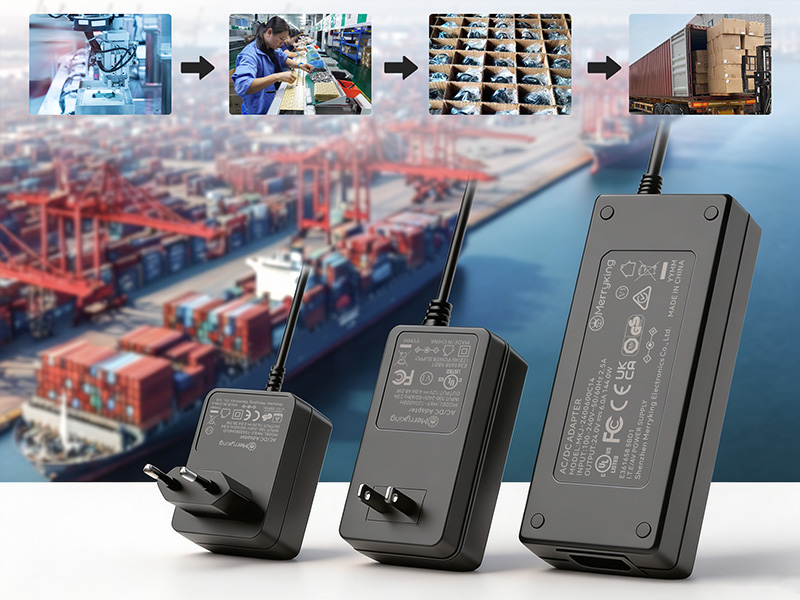
Logistics choices change your cost and your risk. Confirm the incoterm with the factory: EXW gives you the lowest price but the most responsibility, FOB shares the risk at the port of loading, and DDP transfers most responsibility to the supplier. For wholesale volumes, sea freight is the economical choice, and the packaging must survive the container journey, so specify the carton strength and palletization. Decide who arranges insurance for the goods during transit and confirm the declared value matches the invoice to avoid customs delays. Factor the lead time into your sales plan with a safety margin, because production, testing, and ocean transit are sequential and each can stretch. An import program with clear terms and a realistic schedule is much easier to manage than one built on assumptions.
An importer planned to launch a line of power adapter wholesale products in the Australian market. Before ordering, the team confirmed that SAA certification and the AU plug configuration were required, and the factory provided certificates covering the exact models. The importer specified a retail-ready box, arranged a pre-shipment inspection with an AQL plan, and agreed FOB terms with the factory. When the container arrived, the goods matched the inspection report, the certificates cleared customs without issue, and the retail launch proceeded on schedule. In the same period, another importer in the same market received a container held at customs because the certificate covered the series name but not the exact model, and the re-testing delay cost the entire first sales window. The scenario shows that the best import programs are the ones where compliance, supplier verification, and logistics are treated as one system rather than separate tasks.
After the first container, the work continues. Keep a record per batch that links the purchase order, the inspection report, the certificates, and the shipping documents, because this file is your evidence for customs, retailers, and any future field issues. Review quality metrics per batch, such as the field failure rate and the defects found in receiving inspection, and share the trends with the factory so problems are corrected at the source. When you expand the product range or enter new markets, repeat the compliance check for the new models and confirm the certificates before production. A power adapter wholesale program that is managed with traceability becomes a stable revenue line, while one managed informally keeps generating surprises.
What is the most common mistake in importing power adapter wholesale products?
The most common mistake is skipping the compliance check before ordering, such as assuming a certificate covers a model when it covers only a similar series. Customs holds, retailer rejections, and re-testing costs are usually the result.
Do I need a third-party inspection for every shipment?
Not necessarily every shipment, but a pre-shipment inspection with an AQL plan is strongly recommended for new suppliers and new models. Once the quality is stable, you can move to random inspections while keeping the AQL requirement in the purchase order.
Which incoterm is best for a first-time importer?
FOB is a common choice because it balances responsibility between you and the factory. DDP is convenient but concentrates risk and cost on the supplier. EXW requires the most logistics capability on your side, so it suits experienced importers.