EN
EN



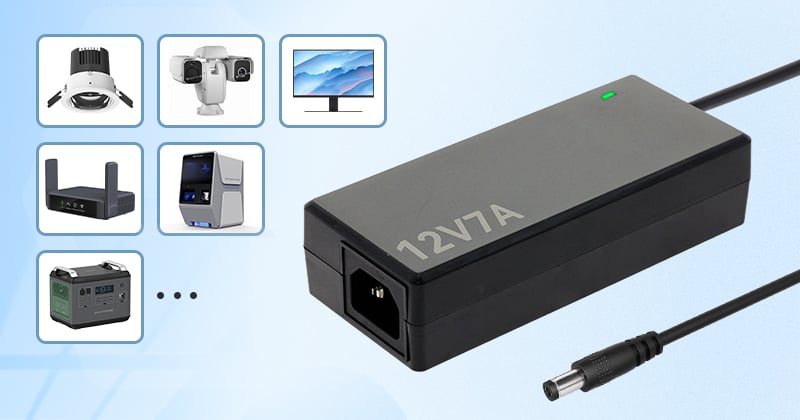
If you have ever set up an LED lighting system, installed security cameras, or worked with networking equipment, you have likely encountered a 12V 7A adapter. This compact power supply converts standard household alternating current (AC) into stable 12-volt direct current (DC), delivering up to 7 amps of current—equivalent to 84 watts of power (12V × 7A = 84W). While smaller adapters (like 12V 1A or 12V 2A units) are common for low-power gadgets, the 12V 7A adapter occupies a unique middle ground: powerful enough to run demanding equipment yet compact and efficient enough for everyday use. Understanding 12v 7a adapter applications helps you select the right power solution for your projects, whether you are a homeowner, a small business operator, or a technician.
One of the most common 12v 7a adapter applications is LED lighting. Many 12V LED strip lights, such as the popular 3528 and 5050 series, are designed to run on 12V DC power. The total current draw depends on the length and density of the strip—a typical 5-meter roll of 5050 LED strip draws approximately 3 to 4 amps at full brightness. With a 12V 7A adapter, you can comfortably power up to 8 to 10 meters of standard LED strip lighting without overloading the power supply. This makes the 12V 7A adapter an excellent choice for under-cabinet kitchen lighting, display case illumination, accent lighting in retail spaces, and even large-scale decorative installations for events. From my experience working with LED installations, using an adapter with higher current capacity than needed—known as “derating”—ensures the power supply runs cooler and lasts longer, as it never operates at its maximum limit.
Security and surveillance systems rely heavily on stable, uninterrupted power. A 12V 7A adapter is widely used to power CCTV cameras, network cameras, and complete surveillance setups. Many analog and IP cameras operate at 12V DC, typically drawing between 0.5A and 1.5A per camera depending on features like infrared night vision, pan-tilt-zoom (PTZ) motors, and built-in heaters. A single 12V 7A adapter can therefore support anywhere from 5 to 10 cameras simultaneously. In fact, some adapters come with 1-to-8 splitter cables, allowing you to power eight cameras from one central adapter—a cost-effective and space-saving solution for home security systems, small businesses, and warehouse monitoring. When I helped a local retail store upgrade their surveillance system, we replaced eight individual wall warts with a single 12v 7a adapter and splitter. This not only cleaned up the cabling but also simplified maintenance, as there was only one power source to check if any camera lost power.
Routers, modems, network switches, and other networking peripherals commonly require 12V DC input. While basic home routers may only need 1A to 2A of current, more demanding equipment—such as high-performance gaming routers, multi-band Wi-Fi 6 routers, and switches with Power over Ethernet (PoE) capabilities—can draw significantly more. A 12V 7A adapter provides ample headroom for these devices, ensuring consistent operation even during peak data traffic. This is particularly important for small office/home office (SOHO) setups where multiple networking devices share a single power supply. A 12V 7A adapter can comfortably run a cable modem (≈1.5A), a Wi‑Fi router (≈2A), and an 8‑port network switch (≈1.5A) simultaneously, with power to spare.
The rise of desktop manufacturing has introduced new power demands. Some older or lower-power 3D printers use 12V systems, particularly those in the Creality Ender series and similar open-frame designs, require a 12V DC power supply. A typical 3D printer draws between 5A and 7A during operation, especially when heating the bed and hot end simultaneously. A 12V 7A adapter is therefore ideally suited for these machines, delivering the necessary current without overloading. Additionally, hobbyist projects involving Arduino boards, Raspberry Pi systems, motor drivers, and small robotics often benefit from a 12V 7A power source—it provides enough current to run multiple servos, sensors, and microcontrollers from a single supply. From my workshop experience, having a reliable 12V 7A adapter on hand is invaluable for prototyping and testing, as it can power almost any 12V device under 84W.
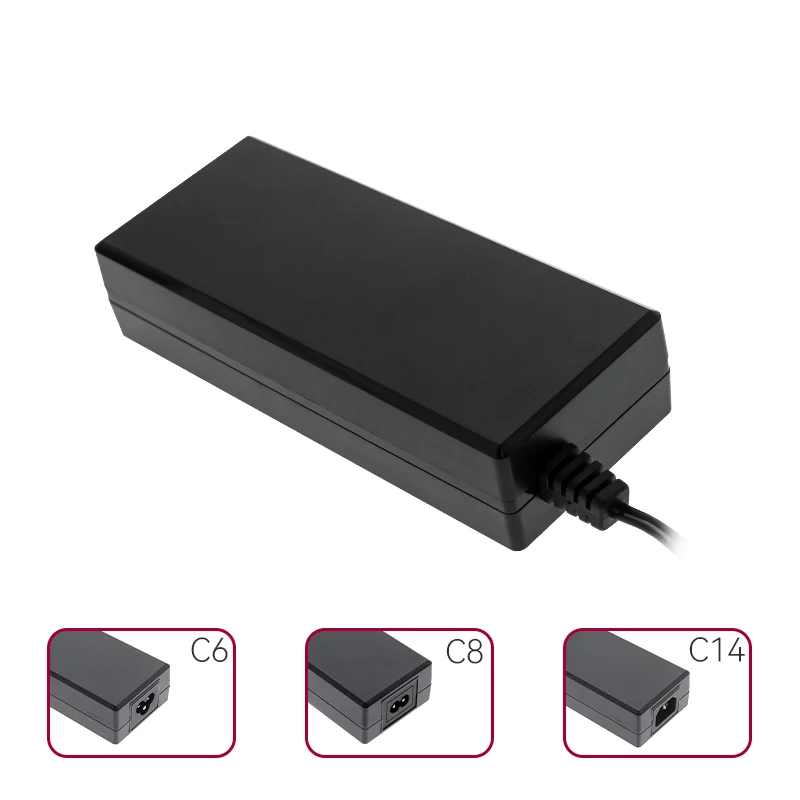
When selecting a 12V 7A adapter, understanding key specifications and safety certifications is crucial for both performance and safety. A quality adapter should accept a universal input voltage of 100–240V AC at 50/60Hz, making it usable worldwide. The Merryking desktop-type 12V 10A power adapter, for example, supports this wide input range and can be configured for 12V 7A output as part of its flexible design, which offers output options from 5V to 48V and currents from 3A to 16A. Critical protection features include short-circuit protection (SCP), over-voltage protection (OVP), over-current protection (OCP), and over-temperature protection (OTP)—all of which safeguard both the adapter and your connected devices. Available certifications may include UL, CE, FCC, PSE, KC, and others, depending on the model and target market.In particular, UL and PSE certifications are widely recognized in North America and Japan respectively, ensuring compliance with local electrical safety standards. When I evaluate power supplies for client projects, I always check for at least UL or CE certification, as these provide a baseline of trust that uncertified adapters simply cannot offer.
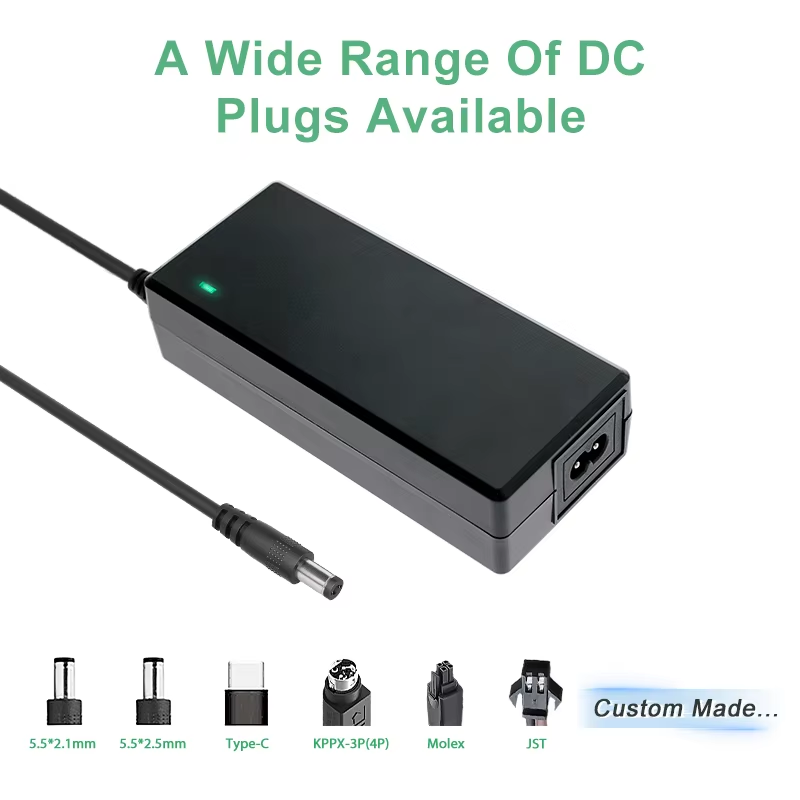
The 12V 7A adapter is a versatile, reliable power solution that finds use across LED lighting, security surveillance, networking, and hobbyist electronics. Understanding 12v 7a adapter applications allows you to make informed purchasing decisions—whether you are powering a single device or an entire system. By choosing a certified adapter with comprehensive protection features, you ensure both performance and safety for years to come. For projects requiring even more current, desktop-type adapters like the Merryking 12V 10A unit offer similar flexibility with higher capacity, but for most mid-range applications, the 12V 7A adapter hits the sweet spot of power, size, and cost.