EN
EN



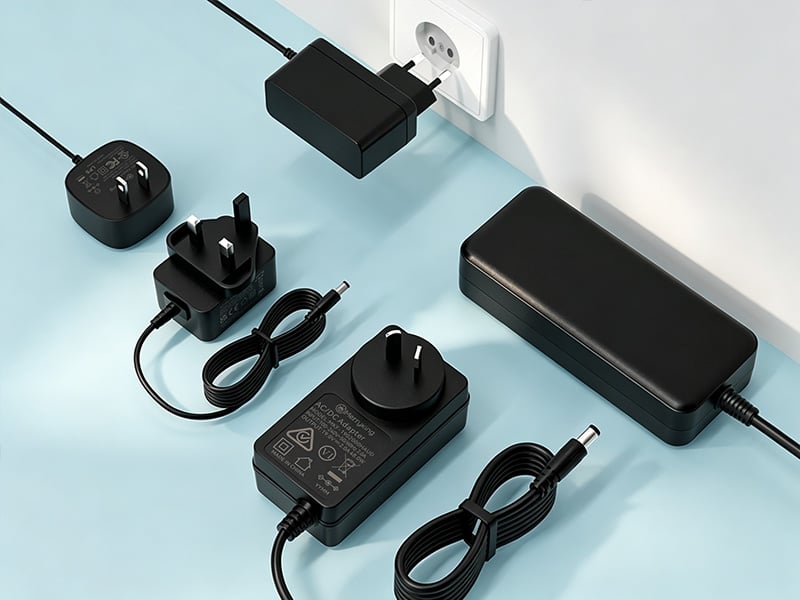
A switching adapter rated for 100-240V 50/60Hz input converts universal AC mains power to a specific DC output voltage and current. The output current rating, measured in amperes (A), determines how much power the adapter can deliver to the connected device. Understanding switching adapter current options is essential because selecting an adapter with insufficient current capacity causes overheating and shutdowns, while excessive current capacity adds unnecessary cost and bulk. The fundamental principle is that the adapter's rated current must equal or exceed the device's maximum current draw. A device that draws 1.5A at 12V requires an adapter rated for at least 1.5A output, which translates to 18W of power. Using an adapter rated for higher current, such as 2A or 3A at 12V, is electrically safe because the device draws only what it needs, but the adapter operates less efficiently at light loads and may have higher no-load power consumption.
Manufacturers typically organize switching adapter current options into power tiers that correspond to different application categories. In the 1W to 15W range, common current ratings include 0.5A, 1A, and 2A at voltages of 5V, 8V, 9V, 12V, and 15V. These low-power adapters serve consumer electronics such as routers, set-top boxes, and small audio devices. The 18W to 36W range typically offers 1.5A to 3A outputs at 12V, 15V, and 24V, covering applications like LED lighting controllers, security cameras, and networking hubs. For higher power needs, desktop adapters in the 36W to 420W range provide current outputs from 3A to 15A at 12V and 24V, suitable for industrial PLCs, medical equipment, communication base stations, and audio amplifiers. USB-C PD chargers add another dimension, offering variable current outputs of 3A to 5A at multiple voltage steps (5V, 9V, 12V, 15V, 20V) to support fast charging protocols for mobile devices and laptops.
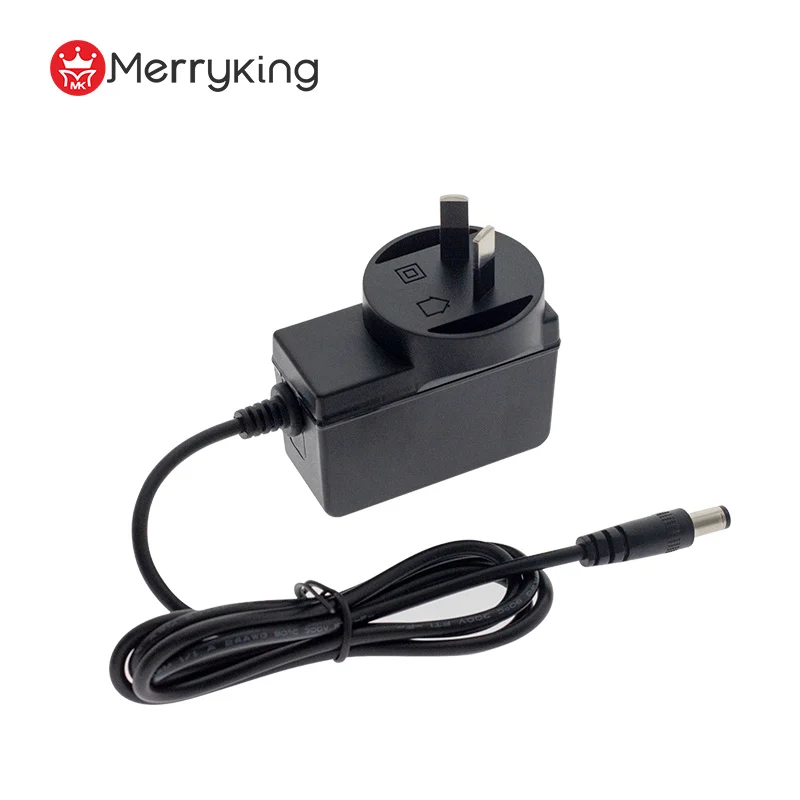
The relationship between voltage, current, and power follows the formula P = V x A, where P is power in watts, V is voltage, and A is current. When evaluating switching adapter current options, buyers must consider both the voltage and current ratings together. A 12V 1A adapter delivers 12W, while a 12V 5A adapter delivers 60W, even though both operate at the same voltage. Common voltage-current combinations include 5V at 2A or 4A for USB-powered devices, 9V at 1A or 1.5A for audio equipment, 12V at 1A to 10A for a wide range of industrial and consumer applications, 15V at 1A or 2A for specialized electronics, and 24V at 2.5A to 15A for industrial automation and LED driver applications. For applications requiring regulated voltage across varying current loads, switching adapters with constant-voltage output maintain stability within plus or minus 2 percent of the rated voltage from minimum to maximum load, provided the current draw remains within the adapter's rated capacity.
Several practical factors influence the actual current delivery of a switching adapter beyond its nameplate rating. Ambient temperature significantly impacts performance: an adapter rated for 2A at 25 degrees Celsius may need to be derated to 1.5A at 40 degrees Celsius in an enclosed installation. Altitude affects cooling efficiency, with output capacity reduced at elevations above 2000 meters due to thinner air. Cable length and gauge introduce voltage drop: a 12V adapter delivering 3A through a 3-meter cable with 20 AWG conductors may lose 0.3V to cable resistance, delivering only 11.7V at the device end. Connector contact resistance adds further losses, particularly in barrel jack connections with worn contacts. For applications where the adapter operates at sustained maximum current for extended periods, buyers should select an adapter with a 20 to 30 percent current margin above the device's continuous draw to account for thermal cycling and component aging over the adapter's operational lifetime.
A network infrastructure company deploying 500 security camera nodes across a commercial campus needed to specify switching adapters for each node. Each camera unit drew 0.8A at 12V during normal operation but peaked at 1.2A during motorized PTZ (pan-tilt-zoom) movements. The initial specification called for 12V 1A adapters, which operated at the upper limit during PTZ operation and caused intermittent thermal shutdowns in outdoor enclosures where ambient temperatures reached 45 degrees Celsius. After reviewing the switching adapter current options with the supplier, the engineering team selected 12V 2A adapters (24W rated) from the 18-30W power adapter series. The 67 percent current margin above peak draw eliminated thermal shutdowns, and the adapters maintained stable output voltage even in high-temperature environments. The supplier, Shenzhen Merryking Electronics, provided derating curves showing that the 2A adapter could sustain 1.6A at 45 degrees Celsius ambient, confirming adequate margin for the deployment conditions.
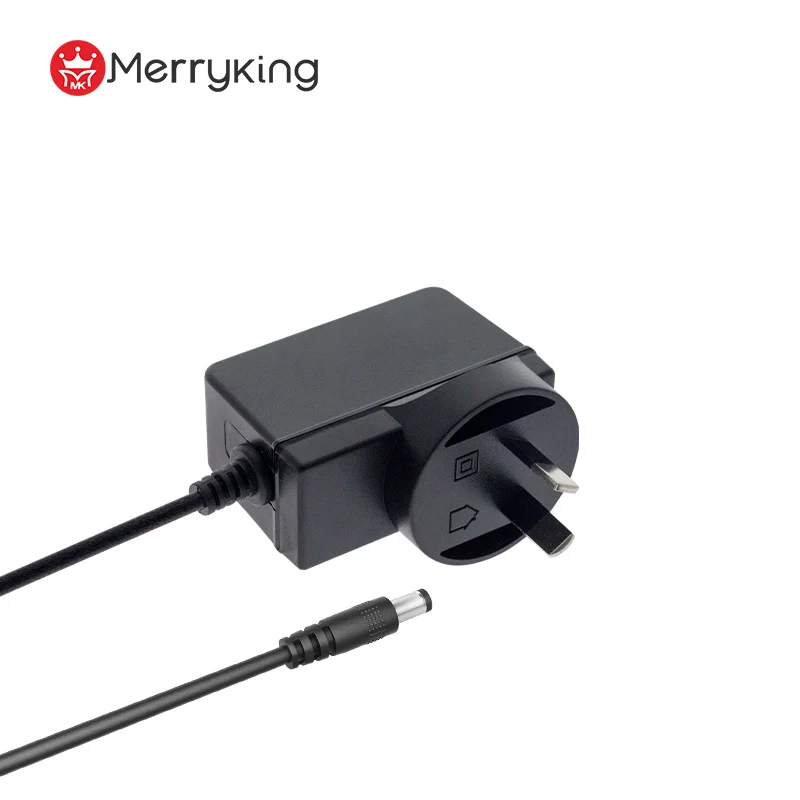
Switching adapter efficiency varies with load, typically peaking between 50 and 75 percent of rated capacity and decreasing at both very light and maximum loads. An adapter rated at 90 percent peak efficiency may deliver only 82 percent efficiency at 10 percent load and 87 percent at full load. This efficiency curve matters for applications where the adapter runs continuously, such as always-on network equipment or medical monitoring devices. Adapters meeting DOE Level VI or CoC Tier 2 efficiency standards maintain high efficiency across a broad load range and have strict no-load power consumption limits, typically below 0.1W. When comparing switching adapter current options, buyers should request the efficiency vs. load curve from the supplier and verify that the adapter meets applicable energy efficiency regulations at both the expected operating load and the no-load condition.
Can I use a higher current adapter than my device requires?
Yes, using an adapter with a higher current rating is electrically safe. The device draws only the current it needs, and the adapter's voltage regulation maintains the output voltage at the rated level. However, the adapter may operate less efficiently at light loads, resulting in slightly higher no-load power consumption. The key requirement is that the adapter's output voltage must match the device's input voltage exactly.
What happens if my adapter's current rating is too low for my device?
An adapter with insufficient current capacity will attempt to deliver more current than its design allows, causing internal components to overheat. This may trigger over-current or over-temperature protection, resulting in output shutdown. If the adapter lacks adequate protection circuits, sustained overload can permanently damage the adapter's switching transformer or output capacitors and potentially create a fire hazard.
How do I calculate the current requirement for my device?
Check the device's nameplate or technical specifications for the input voltage and current ratings. If only power consumption is listed, calculate current using the formula I = P / V, where I is current in amperes, P is power in watts, and V is voltage. Add a 20 to 30 percent margin for peak loads and thermal derating. For example, a device rated at 24W and 12V requires 2A, and with margin, a 2.5A or 3A adapter is recommended.